Desk Worker Stretching Therapy: 5 Proven Ways to Ease Pain
Nearly nine in ten UK office employees report some form of back or neck discomfort by the end of the working week. If your shoulders creep up towards your ears by 3pm and your lower back aches before you have even left your chair, you are not imagining it. Desk worker stretching therapy is a structured approach to countering exactly this kind of screen-induced stiffness, and it takes far less time than most people assume.
This guide breaks down what it actually involves, why it matters, and how to build it into a day that already feels too full. By the end, you will have a practical routine you can start using this afternoon, along with a clearer picture of why so many people underestimate how much daily sitting is costing their bodies.
What Is Desk Worker Stretching Therapy?
Desk worker stretching therapy refers to a set of targeted stretches and passive decompression techniques designed specifically for people who sit at a screen for most of the day. Unlike a general fitness stretch routine, it focuses on the muscles and joints that suffer most from prolonged sitting: the lumbar spine, the neck, the shoulders, and the hip flexors.
The goal of desk worker stretching therapy is not flexibility for its own sake. It is about undoing the specific postural damage caused by hours in a fixed, forward-leaning position. That damage builds quietly, which is why so many people only notice it once it has become genuine pain.
Why Sitting Causes So Much Damage
When you sit for long periods, your hip flexors shorten, your upper back rounds forward, and your neck tilts to meet a monitor that is rarely at the right height. According to the Stretching guidance, gentle regular stretching helps improve flexibility and reduce the muscle tightness that builds from repetitive posture. Desk work is repetitive posture in its purest form.
None of these changes happen overnight. They accumulate slowly across weeks and months, which is exactly why so many desk workers dismiss early warning signs like a stiff neck on a Monday morning or a dull ache after a long video call. By the time the discomfort becomes hard to ignore, the underlying muscles have often been compensating for a long time.
Why Desk Workers Need It More Than Ever
Remote and hybrid working has quietly increased average sitting time. Many people no longer walk to a train station, climb office stairs, or even leave their desk for lunch. Without those small movement breaks, the case for desk worker stretching therapy becomes stronger every year, not weaker.
- Spinal compression builds gradually and often goes unnoticed until it causes pain
- Forward head posture adds extra load to the neck and upper back muscles
- Tight hip flexors from sitting can pull on the lower back and disrupt alignment
- Shallow breathing patterns develop when the chest and shoulders round forward
Desk worker stretching therapy addresses each of these issues directly rather than treating pain after it has already set in. Prevention is genuinely cheaper and simpler than correction, both in time and in the frustration of ongoing discomfort.
The Best Desk Worker Stretching Therapy Techniques
You do not need a gym membership or an hour of free time to benefit from desk worker stretching therapy. Most of the following techniques take five minutes or less and can be done beside your desk.
1. Passive Spinal Decompression
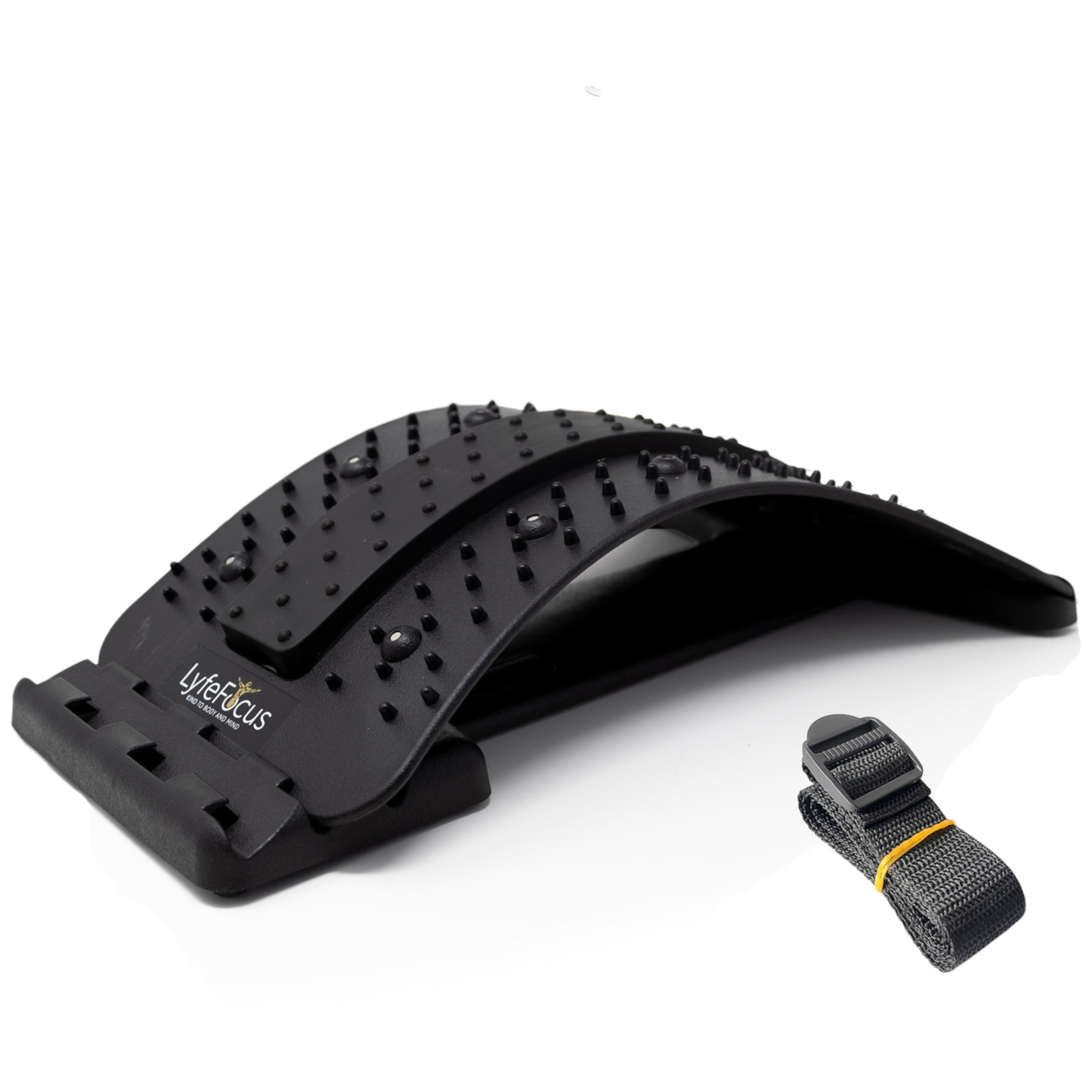
A back stretcher is one of the simplest tools for desk worker stretching therapy because it does the work for you. Sitting with the device positioned at the base of the spine and gently reclining allows the vertebrae to decompress without any active effort, which is ideal after a long stretch of sitting still.
2. Seated Hip Flexor Release
Cross one ankle over the opposite knee while seated and lean gently forward from the hips. Hold for 20 to 30 seconds on each side. This is one of the most effective forms of desk worker stretching therapy for people who notice tightness when they first stand up.
3. Neck and Upper Trap Stretch
Tilt your ear towards your shoulder, using light hand pressure only if it feels comfortable. This targets the muscles that carry most of the strain from forward head posture and is a core part of any desk worker stretching therapy routine.
4. Chest Opener
Clasp your hands behind your back and gently lift, opening the chest and rolling the shoulders back. Rounded shoulders are one of the clearest signs that desk worker stretching therapy is overdue.
5. Standing Lumbar Extension
Stand, place your hands on your lower back, and gently lean backwards while looking slightly upward. This reverses the forward curve that builds throughout the day and pairs well with any stretching plan built around a supportive device.
None of these techniques require special equipment or a private room. Most can be done at your desk, in a meeting break, or while waiting for a call to connect, which is exactly why they fit so easily into a working day that leaves little room for a full workout.
How to Build a Desk Worker Stretching Therapy Routine
Consistency matters more than intensity. A short, repeatable desk worker stretching therapy routine that you actually follow will always beat an ambitious one you abandon after a week.
Many people try to overhaul their entire day at once, adding several new habits simultaneously, and burn out within days. Starting small and building gradually is far more sustainable, especially alongside a demanding work schedule.
- Set a recurring reminder every 60 to 90 minutes to stand and move
- Keep a back stretcher within reach of your desk so there is no barrier to using it
- Pair stretching with something you already do, such as your first coffee or a lunch break
- Track how your body feels after two weeks rather than expecting instant results
- Adjust the timing if mornings feel too rushed, since a routine you skip does nothing
Using a supportive tool as part of your desk worker stretching therapy routine removes the guesswork. Rather than trying to remember five separate stretches, a single device positioned correctly can deliver much of the same decompression benefit in less time.
Common Mistakes That Undermine Desk Worker Stretching Therapy
Many people try stretching for a few days, feel no dramatic change, and give up. Desk worker stretching therapy works cumulatively, not instantly, so a short trial is rarely enough to judge results fairly.
- Stretching only when pain is already severe, rather than as daily prevention
- Forcing a deep stretch instead of holding a gentle, sustainable position
- Ignoring desk setup, so the same postural strain returns within minutes
- Ignoring the discomfort of a device that is set to too advanced a level
- Skipping sessions on busy days and only returning once discomfort has built back up
Correcting these habits is often what separates people who benefit from desk worker stretching therapy long term from those who quietly give up after a fortnight. Small adjustments to how and when you stretch tend to matter far more than the intensity of any single session.
Need stretching therapy?
Desk worker stretching therapy will not undo years of poor posture overnight, but it consistently reduces day-to-day stiffness when practised regularly. Small, repeatable habits beside your desk add up to meaningfully less tension in your back, neck, and shoulders over time.
The goal is not perfection. It is steady, cumulative relief that lets you get through a working day without dreading how your body will feel by the evening.
If you have questions about which product suits your situation, our support team is happy to help, visit our page.

Back Stretcher S1
Relieve back pain and restore your posture with a gentle, effective stretch.
Shop Now →