Back Flexibility Exercises: 7 Simple Moves to Ease Daily Stiffness
If you spend most of your day hunched over a laptop, you already know how tight and achy your spine can feel by 5pm. Back flexibility exercises are one of the simplest, most effective ways to undo that stiffness without needing a gym membership or any special equipment. A few minutes of consistent stretching can loosen tight muscles, improve your range of motion, and make everyday movements like bending, twisting, and reaching feel noticeably easier.
In this guide, you will find seven practical back flexibility exercises you can do at home or even at your desk, plus tips on how often to do them and what to avoid if you are dealing with existing pain.
Why Back Flexibility Exercises Matter for Desk Workers
Sitting for long stretches shortens the muscles around your hips and lower back. Over time, this tightness pulls on your spine and limits how far you can comfortably bend or twist. Regular back flexibility exercises counteract this by gently lengthening those muscles and encouraging better movement through the whole spine.
Improved flexibility is not just about comfort either. A more mobile back supports better posture, reduces the load on tight muscles during everyday tasks, and can lower your risk of minor strains when you lift, reach, or turn quickly. NHS guidance on flexibility exercises recommends building these movements into your routine at least twice a week for noticeable benefits.
How to Prepare Before Stretching
A few minutes of preparation makes back flexibility exercises safer and more effective.
- Wear loose, comfortable clothing that will not restrict your movement.
- Warm up first with light activity, such as a short walk, to get blood flowing to the muscles.
- Move slowly into each stretch rather than bouncing or forcing the position.
- Stop immediately if you feel sharp pain, numbness, or tingling.
Building up gradually is key. You do not need to push to your maximum range on day one. Back flexibility exercises work best when practised consistently over weeks, not forced in a single session.
7 Back Flexibility Exercises You Can Do at Home
These back flexibility exercises target different areas of the spine, from the upper back down to the lumbar region. Work through them slowly and breathe normally throughout.
1. Cat-Cow Stretch
Start on your hands and knees with your wrists under your shoulders and knees under your hips. Arch your back upward, tucking your chin to your chest. Then dip your back down, lifting your head and chest gently towards the ceiling. Move slowly between the two positions for 8 to 10 repetitions.
2. Knee-to-Chest Stretch
Lie on your back with your knees bent and feet flat on the floor. Slowly draw one knee towards your chest, holding it with both hands for a gentle stretch. Hold for 15 to 20 seconds, then switch sides. This is one of the most accessible back flexibility exercises for easing lower back tightness.
3. Seated Spinal Twist
Sit upright in a chair with your feet flat on the floor. Place one hand on the opposite knee and gently twist your torso towards that side, looking over your shoulder. Hold for a few seconds, then repeat on the other side. This works well as a desk-friendly option among back flexibility exercises.
4. Child’s Pose
Kneel on the floor, then sit back onto your heels while reaching your arms forward and lowering your chest towards the ground. Hold the position for 20 to 30 seconds, breathing deeply. This gently lengthens the lower back and shoulders at the same time.
5. Sideways Bend
Stand upright with your feet hip-width apart and arms by your sides. Slide one arm down your leg as far as feels comfortable, keeping your torso facing forward. You should feel a stretch along the opposite side of your back. Hold for a couple of seconds and repeat three times on each side.
6. Lower Back Rotation
Lie on your back with your knees bent and feet flat. Keeping your shoulders on the floor, gently let both knees fall to one side, then return to centre and repeat on the other side. This is a gentle way to mobilise the lumbar spine without strain.
7. Standing Forward Fold
Stand with feet hip-width apart and slowly hinge forward from the hips, letting your arms hang towards the floor. Keep a slight bend in your knees. Hold for 15 to 20 seconds, then roll back up slowly, vertebra by vertebra.
How Often Should You Do Back Flexibility Exercises
Consistency matters more than intensity. Aim to practise these back flexibility exercises at least two to three times a week, though daily stretching is even better if your schedule allows. Short, regular sessions of five to ten minutes tend to produce better long-term results than occasional longer sessions.
If you sit at a desk most of the day, try breaking your stretching into smaller chunks. A quick seated twist or cat-cow between meetings keeps your spine moving without needing to set aside extra time.
Common Mistakes to Avoid
Even simple back flexibility exercises can do more harm than good if performed incorrectly. Watch out for these common mistakes:
- Bouncing into a stretch instead of moving slowly and holding the position.
- Holding your breath, which increases tension rather than releasing it.
- Pushing through sharp pain instead of stopping and reassessing.
- Skipping the warm up and stretching cold muscles straight away.
- Doing the same stretch repeatedly while ignoring stiffness in other areas of the back.
If your back pain does not improve after a few weeks of consistent back flexibility exercises, or if it gets worse, it is worth speaking to a healthcare professional rather than continuing to self-manage.
Back Flexibility Exercises for Different Areas of the Spine
Your spine is made up of three main regions, and tightness in one area often affects how the others move. Targeting back flexibility exercises to each section helps create more balanced, even mobility rather than overworking one part of the back.
The upper back, or thoracic spine, tends to stiffen from rounded shoulders and prolonged screen time. Cat-cow and seated twists work well here, as they encourage rotation and extension through the mid-back. The lower back, or lumbar spine, is where most day-to-day stiffness builds up from sitting. Knee-to-chest stretches and gentle lower back rotations are particularly useful for this area.
If you notice one area feels tighter than the rest, spend an extra minute or two on the back flexibility exercises that target that specific region rather than rushing through the full set. Listening to your body and adjusting accordingly will get you better results than following a rigid routine that ignores where you actually feel restricted.
Supporting Your Stretching Routine With the Right Tools
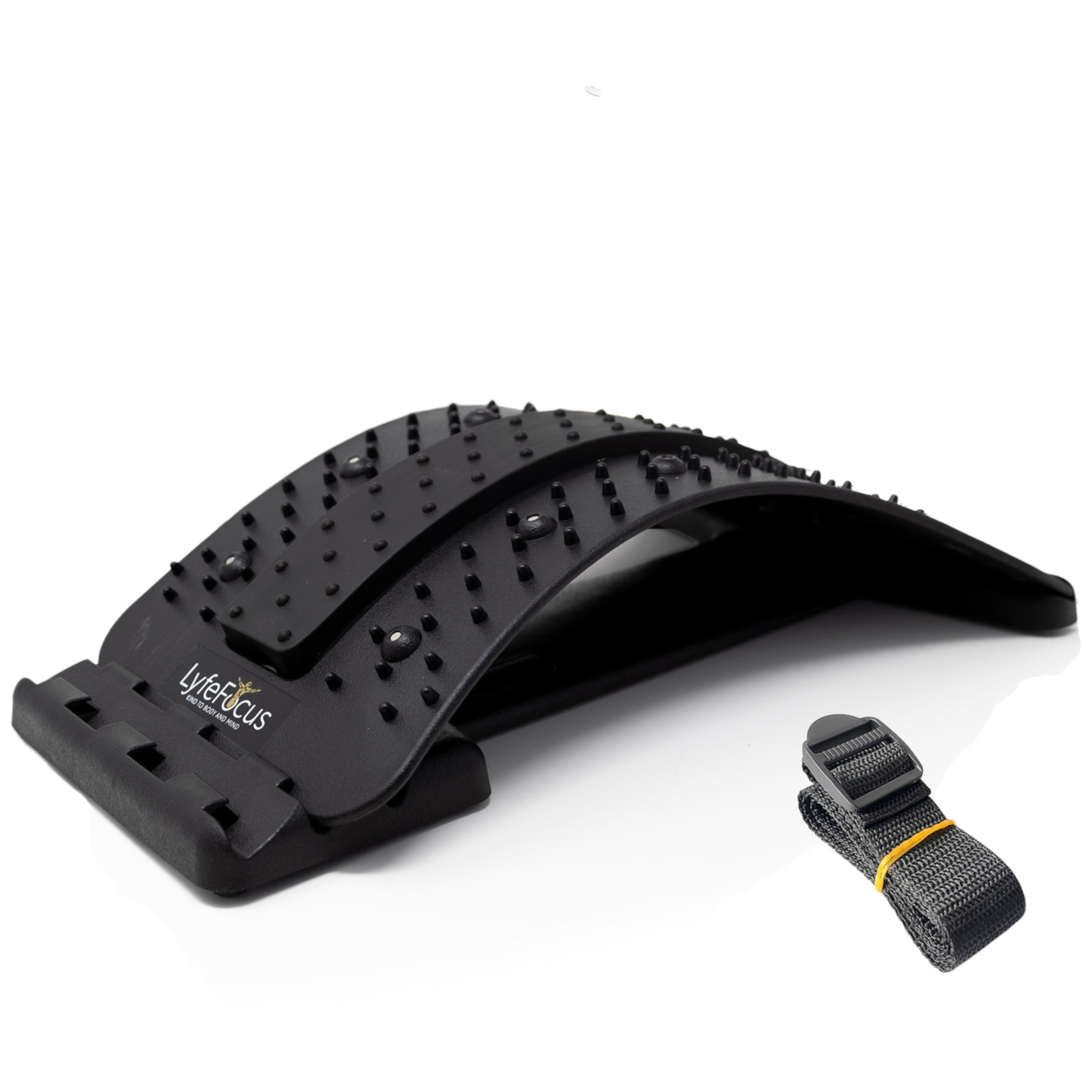
Bodyweight stretches are a great starting point, but a supportive tool can deepen the benefits of your back flexibility exercises. The LyfeFocus Back Stretcher S1 is designed to gently restore the spine’s natural curve while you relax into position, making it easier to target tight areas in the lumbar region that bodyweight stretches alone do not always reach.
Many people pair their daily Back Stretcher S1 session with the stretches above for a more complete routine. Used for around five minutes a day, it offers a hands-free way to reinforce the flexibility gains you are working towards with regular stretching.
Start Feeling the Difference
Back flexibility exercises do not need to take up much of your day to make a real difference. A short, consistent routine of stretches like cat-cow, knee-to-chest, and seated twists can ease daily stiffness and support better movement over time. Pair these with mindful posture during the day and you will likely notice a difference within a few weeks.
Want to know more before you commit? Our friendly support team is happy to chat over.

Back Stretcher S1
Relieve back pain and restore your posture with a gentle, effective stretch.
Shop Now →