Migraine Relief Cap For Headaches: Does It Actually Work?
A migraine relief cap for headaches is one of those products that sounds almost too simple to work, yet it has become a genuine go-to for people who want fast, drug-free comfort during an attack. Instead of holding a cold pack in place with one hand while trying to function with the other, a migraine relief cap for headaches wraps around the whole head, staying put while you rest, work, or try to sleep. This guide covers exactly how it works, how to use one properly, and who is likely to benefit most, so you can decide whether it deserves a permanent spot in your freezer.
What Is A Migraine Relief Cap For Headaches
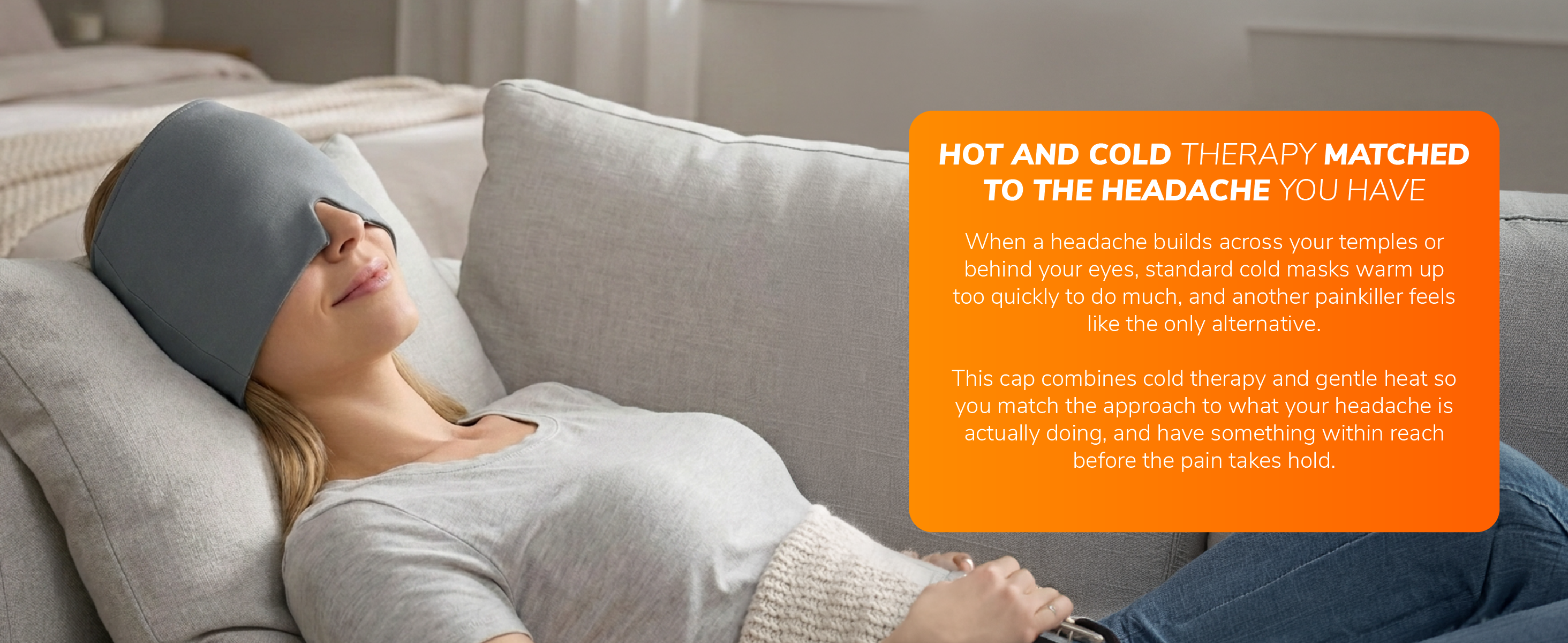
A migraine relief cap for headaches is a stretchy, gel-filled wrap designed to sit snugly over the head, temples, and sometimes the eyes, delivering either cooling or warming therapy depending on how it has been prepared. Unlike a flat pack you hold against your forehead, the cap-style design means both hands stay free and the pressure stays even across the whole area rather than concentrated on one spot.
Most versions are made from a soft, flexible material that stretches to fit different head sizes, with gel panels running through the fabric so the therapy reaches the forehead, temples, and base of the skull all at once.
How A Migraine Relief Cap For Headaches Works
Cooling the head narrows the blood vessels near the surface of the skin, which is thought to ease the throbbing sensation that many people associate with migraine. A migraine relief cap for headaches also provides light, even compression, which some people find soothing in its own right, separate from the temperature effect.
The material typically blocks out light as well, which matters because sensitivity to light is one of the most common migraine symptoms. Combining gentle compression, temperature therapy, and a dark covering in a single product is what sets a migraine relief cap for headaches apart from a basic ice pack.
How To Use A Migraine Relief Cap For Headaches
Chilling For Cold Therapy
Place the cap in the freezer for at least an hour before you expect to need it, or keep it stored there permanently so it is always ready. Most people find two hours gives the deepest, longest-lasting cold.
Warming For Heat Therapy
If you prefer heat, or find that your particular headache responds better to warmth, the same cap can usually go in the microwave for short bursts of ten to twenty seconds, checking the temperature between each burst so it never becomes uncomfortably hot.
Wearing It Comfortably
Pull the cap on gently, adjusting it so the gel panels sit across your forehead and temples rather than bunching to one side. Most people find a migraine relief cap for headaches most comfortable when lying down, since the weight is supported by the pillow rather than the neck.
How Long To Wear It
Sessions of fifteen to twenty minutes are typical, though many people leave the cap on longer once it has warmed to a more neutral temperature, simply for the comfort of the compression and darkness. According to NHS guidance on migraine, both hot and cold approaches can play a role in easing symptoms alongside other self-care steps.
If pressure points feel more effective for you than temperature alone, our guide to headache pressure points covers a technique that pairs well with a cap for extra relief during an attack.
Migraine Relief Cap For Headaches Versus Traditional Ice Packs
A traditional ice pack has to be held in place, which is awkward when you are lying down and want to keep your eyes closed. A migraine relief cap for headaches solves that problem by design, staying secure without any pressure from your hand or a rolled towel.
The built-in light-blocking fabric is another meaningful difference. A standard gel pack does nothing for light sensitivity, whereas a well-designed cap tackles both the physical pain and the environmental trigger in one go.
Who Benefits Most From A Migraine Relief Cap For Headaches
Anyone who experiences migraine with light sensitivity is likely to notice the biggest difference, since the cap addresses two symptoms at once. It also suits people who want to keep working through a mild attack, since the hands-free design means you can still type, read, or rest your head on a desk without holding anything in place.
Frequent flyers and shift workers who deal with headaches triggered by disrupted sleep or long hours under artificial light often find a cap easier to travel with and use on the go compared with bulkier packs. Parents managing a household while also trying to rest through a migraine often mention the hands-free design as the single biggest practical advantage over anything they have tried before.
Caring For Your Migraine Relief Cap For Headaches
Wipe the outer fabric with a damp cloth after use rather than submerging the whole cap in water, since this protects the gel panels and stitching over time. Allow it to air dry fully before returning it to the freezer, and store it flat rather than folded to keep the gel evenly distributed inside each panel.
Keeping One Ready For Travel
Because it needs freezer time to work as cold therapy, planning ahead matters more than it does with an instant cold spray or tablet. Keeping a spare in the freezer at all times means you are never caught without one when a migraine starts, rather than realising too late that yours is sitting warm in a drawer.
For travel, a small insulated bag can keep the cap cold for a few hours after it leaves the freezer, which is often enough to get through a flight or a long car journey if symptoms strike unexpectedly away from home.
Mistakes To Avoid
Putting the cap on straight from the freezer without checking it first can feel uncomfortably intense, especially around the temples where the skin is thinner. Give it a minute to soften slightly before pulling it on if it feels rock hard.
Overheating the cap is another common slip. Always check the temperature after each short burst in the microwave rather than guessing at a longer single heating time, since gel packs can overheat quickly once they pass a comfortable temperature.
Skipping the wipe-down after use is easy to forget but shortens the life of the fabric over time, particularly if the cap has been resting against the skin for an extended session.
Frequently Asked Questions
Can it be used with migraine medication?
Yes, a migraine relief cap for headaches is drug-free and can be used alongside prescribed or over-the-counter medication as an additional comfort measure.
Is one size suitable for everyone?
Most caps use a stretchy, one-size design intended to fit a wide range of head sizes comfortably, though it is worth checking the specific product details before buying.
How often can I use it?
It can be used as often as needed during an attack, though giving your skin a break between sessions helps avoid any irritation from prolonged cold or heat exposure.
Ready To Try One
If migraines regularly send you looking for a dark room and something cold for your head, a migraine relief cap for headaches is worth having ready in the freezer for the next time symptoms strike. It is reusable, drug-free, and designed to stay in place so you can actually rest rather than holding a pack against your face, which matters most in the moments when even lifting an arm feels like too much effort.
Want to know more before you commit? Our friendly support team is happy to chat — get in touch.

Migraine Relief Cap (Black)
Soothe migraines, headaches, and tension with reusable hot and cold therapy that blocks out light.
Shop Now →