
Recovery Sleep: 6 Powerful Habits That Help Your Body Heal Overnight
You are getting seven or eight hours a night but still waking up stiff, tired, and carrying the tension from the day before. Sound familiar? For UK desk workers, this is one of the most common and most frustrating experiences, and the cause is almost never the number of hours spent in bed. The real issue is recovery sleep quality. Recovery sleep refers to the deep, restorative stages of sleep where your body repairs muscle tissue, resets your nervous system, and clears the physical and mental residue of the day. Without it, no amount of time in bed will leave you feeling genuinely refreshed. This guide covers what recovery sleep actually is, what destroys it, and the six habits that make the biggest difference.
Why Recovery Sleep Matters More Than Most People Realise
There is a significant difference between being unconscious for eight hours and actually achieving recovery sleep. Most people have been conditioned to measure sleep by duration alone. Recovery sleep shifts the focus to what is happening during those hours, specifically whether your body is spending enough time in the deep slow-wave and REM stages where real restoration takes place.
For desk workers, the consequences of missing out on recovery sleep are immediate and cumulative. Muscle tension that builds up during the day does not fully release. Inflammatory markers stay elevated overnight. Cortisol, the stress hormone, fails to drop as it should, meaning you wake up already in a low-grade state of physiological stress before the working day has even started. Over weeks and months, poor recovery sleep compounds into persistent back pain, neck stiffness, low energy, and reduced ability to concentrate.
According to the NHS, sleep is vital for good physical and mental health, and longer stretches of disrupted or poor-quality sleep can have a serious negative impact on overall wellbeing. You can read more at the NHS Every Mind Matters sleep page. Understanding what recovery sleep actually is, and what blocks it, is the essential first step toward achieving it consistently.
What Actually Happens to Your Body During Recovery Sleep
Recovery sleep is not passive rest. While you are asleep, your body runs a repair programme that cannot be replicated by any waking activity, no matter how well-designed your wellness routine is.
During the deep slow-wave stages of recovery sleep, the pituitary gland releases growth hormone. This drives muscle repair, tissue regeneration, and cellular recovery. If you use a foam roller, a back stretcher, or any manual therapy tool during the day, the actual physical rebuilding from those sessions happens during recovery sleep. The tool breaks up the tension and adhesions; sleep is when the tissue repairs and rebuilds. If your recovery sleep is poor, you are doing the work without collecting the benefit. Our guide to foam rolling for tight hips and muscle release explains how this works in practice alongside a daily rolling routine.
During REM sleep, your brain processes the emotional load of the day, consolidates memory, and regulates mood. Poor REM recovery sleep is directly linked to elevated stress responses and lower pain tolerance, which is why people who sleep badly tend to feel physical discomfort more acutely the following day. Recovery sleep is also when your immune system produces the proteins that reduce inflammation. Chronic sleep deprivation has a measurable effect on how quickly your body recovers from injuries, overuse, and the kind of sustained tension that desk work produces daily.
The Biggest Recovery Sleep Mistakes UK Desk Workers Make
Many of the habits that disrupt recovery sleep feel completely harmless in the moment. Identifying and removing these is often more effective than adding new routines to your evening.
Screens until the moment you get into bed. Blue light from phones, tablets, and laptops suppresses melatonin production, which is the hormone that signals to your body that it is time to move into recovery sleep. Without adequate melatonin, your body struggles to enter the deeper stages of sleep efficiently, regardless of how exhausted you feel.
Eating a heavy meal late in the evening. Digestion is an active process. It diverts blood flow and metabolic energy away from the restorative work that recovery sleep is supposed to deliver. A large meal within two hours of bed consistently reduces sleep depth.
Using alcohol as a sleep aid. Alcohol may reduce the time it takes to fall asleep, but it significantly suppresses REM sleep and fragments the deep stages of recovery sleep. People who drink regularly before bed often sleep longer but wake feeling unrefreshed because they are not achieving genuine recovery sleep despite the hours in bed.
Inconsistent sleep timing. Your body’s circadian rhythm governs the quality of recovery sleep as much as any other factor. Going to bed and waking at inconsistent times, including lying in at weekends, disrupts this rhythm and reduces the proportion of time spent in deep recovery stages. Consistency of wake time is more important than consistency of bedtime.
Carrying unresolved physical tension into bed. This is the most relevant mistake for desk workers. If your back, neck, and shoulders are tight when you lie down, your nervous system stays in a partially activated state. That activation competes directly with the shift into parasympathetic rest that recovery sleep requires. Releasing physical tension before bed is not optional if you want genuine overnight recovery.
How to Build a Recovery Sleep Routine That Actually Works
A recovery sleep routine is not a rigid checklist. It is a set of consistent conditions that make it easier for your body to do what it is already designed to do. These six habits produce the most reliable improvements in recovery sleep quality for people with busy, desk-based working lives.
Habit 1: Fix your wake time first. Choose a time you can maintain seven days a week and stick to it regardless of when you went to bed. Your body anchors the timing of recovery sleep stages around your wake time. Once it is consistent, falling asleep at night becomes easier and the proportion of deep recovery sleep increases naturally.
Habit 2: Dim your environment one hour before bed. Switch to warmer, lower lighting in the final hour before sleep. This supports natural melatonin production and begins signalling the body’s transition toward recovery sleep well before you actually get into bed.
Habit 3: Go screen-free for the final 30 minutes. Replace scrolling with reading, breathwork, or a brief relaxation session. This reduces nervous system activation and allows your brain to begin the wind-down process that recovery sleep depends on.
Habit 4: Keep your bedroom cool. Core body temperature needs to drop slightly to initiate recovery sleep. A room temperature of around 16 to 19 degrees Celsius is widely considered optimal for deep, restorative sleep. If your room runs warm, a fan or open window in the evening makes a meaningful difference.
Habit 5: Release physical tension before lying down. Five to twenty minutes of targeted tension release before bed is one of the highest-impact changes a desk worker can make to their recovery sleep. This is where an acupressure mat earns its place in an evening routine. Lying on an acupressure mat for 15 to 20 minutes stimulates pressure points across the back and shoulders, triggers endorphin release, and shifts the nervous system from a stress-activated state into the parasympathetic rest mode that recovery sleep requires. Many LyfeFocus users specifically report falling asleep faster and waking with noticeably less tension after adding an acupressure mat session to their pre-bed routine. Unlike stretching, which requires active effort, an acupressure mat works passively while you lie still and breathe, making it a realistic habit to maintain even on difficult evenings.
Habit 6: Cut caffeine after 2 pm. Caffeine has a half-life of five to six hours in most people. A coffee at 3 pm still has a significant stimulant effect at 8 pm, compressing the window of quality recovery sleep even if you fall asleep without difficulty.
How Temperature Can Deepen Your Recovery Sleep
Temperature regulation is one of the most underused and most effective tools for improving recovery sleep quality. Your core body temperature needs to fall by approximately one degree Celsius to trigger the deeper stages of recovery sleep. Anything that helps accelerate that drop will improve both how quickly you enter recovery sleep and how deeply you stay there.
A brief cool or lukewarm shower in the evening is one of the simplest ways to support this process. The shower warms the skin surface, which draws blood toward the extremities. When you step out into cooler air, your core temperature drops more quickly than it would without the shower, giving your body the signal it needs to shift into recovery sleep mode. Some people find that ending a warm shower with 30 to 60 seconds of cooler water gives the best result, combining muscle relaxation from the warmth with the temperature drop that recovery sleep requires.
Pairing a cool evening shower with an acupressure mat session creates a particularly effective pre-sleep sequence. The acupressure mat releases the physical tension stored in the back and shoulders, while the shower assists the temperature regulation that underpins recovery sleep depth. Both take under 30 minutes combined and require no active effort once you are in the habit.
Start Feeling the Difference
Recovery sleep responds quickly to the right changes. Most people notice a meaningful shift in how refreshed they feel within five to seven days of addressing the biggest disruptors and adding one or two of the habits above. Start with your wake time and your pre-sleep tension release, as these tend to produce the fastest results for desk workers. Add the other habits gradually rather than trying to overhaul everything at once.
The acupressure mat is worth trying early in that process. It addresses the physical tension that desk work creates and that most people carry directly into bed without realising it is blocking their recovery sleep. Used consistently in the 20 minutes before bed, it is one of the few tools that directly supports the nervous system shift that deeper recovery sleep depends on.
Get in Touch
Our team is available to help you find the right solution. Drop us a message anytime via our contact page and we will point you toward the best option for your situation.

Acupressure Mat & Pillow (Black)
Relax your body and calm your mind with gentle acupressure relief.
Shop Now →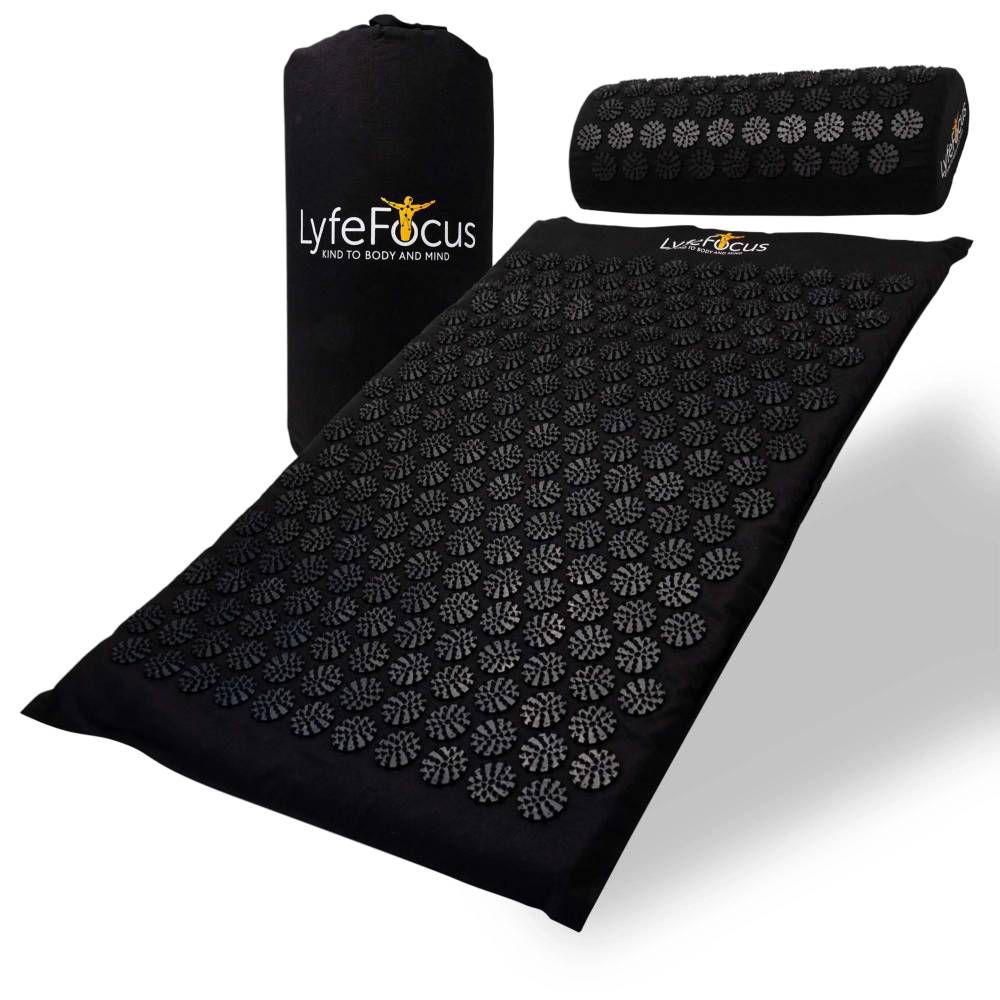
Related posts:
 Back Stretcher For Pain Relief: What It’s For, How To Use It, And Common Mistakes
 Acupressure Mat for Neck Pain: How We Target Traps, Shoulders, and Upper Back (LyfeFocus UK Guide)
 Acupressure Mat Positions And Benefits: A Natural Way to Relieve Stress and Muscle Tension in Preston
 Acupressure Mat Stomach Benefits: What You Need to Know

