Best Posture Corrector UK: 6 Essential Checks Before You Buy
Do your shoulders creep forward by mid-afternoon? You are not alone. Many desk workers slump without noticing, and the best posture corrector UK buyers choose is the one that reminds them to sit tall without getting in the way. This guide shows you how to pick the best posture corrector UK shops sell, using six simple checks. You will also learn the common buying mistakes, how to wear one safely, and where a LyfeFocus option fits. Read on and choose with confidence.
What the Best Posture Corrector UK Desk Workers Need Should Do
A posture corrector is a light wearable support. It gently draws your shoulders back, so your upper back rests in a better position. It does not replace movement or strength training. Think of it as a prompt, not a cure.
The best posture corrector UK shoppers rate highly does three jobs. It makes you notice slouching, it feels comfortable for short periods, and it is easy to put on. If a product fails at any of these, it will end up in a drawer within a week.
Desk work is the main reason most people look for one. Hours of typing, scrolling and video calls pull the head forward and round the shoulders. A good support gives your body a regular nudge back towards a neutral position, which is useful when you are focused on a screen.
How to Choose the Best Posture Corrector UK Desk Workers Can Wear Daily
Use these six checks before you buy. They work for any brand, including ours.
1. Comfort for a Working Day
Look for soft, breathable padding and straps that do not dig into your underarms. If a corrector feels sore after ten minutes, you will not use it. The best posture corrector UK reviewers praise is the one people forget they are wearing.
2. A Fit That Matches Your Measurements
Size matters more than most buyers expect. A strap that is too loose does nothing, and one that is too tight is uncomfortable. Always measure yourself with a tape and compare the result with the size chart, not your clothing size.
3. Support for the Upper Back
Posture correctors are designed for the upper back and shoulders. If your discomfort sits in your lower back, a corrector is not the right tool, and a lower back belt may suit you better. Check that the product says clearly what it supports, and be wary of any that claims to fix everything.
4. A Discreet Design Under Clothing
Most people wear one at work, so it should not show through a shirt. A slim design lets you join a video call without anyone noticing. Lighter colours suit pale tops, and darker ones suit dark tops, so a choice of colours is a real advantage. Whichever colour you pick, the best posture corrector UK shoppers prefer blends in with their wardrobe.
5. Easy to Put On Without Help
You should be able to put it on and take it off alone, in under a minute. Adjustable straps help, because your fit changes with different clothes. Complicated buckles are a common reason people stop wearing a corrector after a few days. The best posture corrector UK buyers keep using is the one that takes seconds to adjust.
6. Clear Instructions and Honest Claims
The best posture corrector UK brands offer comes with clear wearing guidance and sensible claims. Be careful with promises such as “fixes your spine in days”. Real posture change takes time, habits and movement. A good brand tells you how long to wear it and when to take it off.
Common Mistakes When Buying the Best Posture Corrector UK Shoppers See Online
Even careful buyers slip up. Avoid these five mistakes and you will save time and money:
- Buying on price alone. The cheapest options often have thin straps that roll or slip.
- Guessing the size. A wrong size is one of the most common reasons for returns.
- Wearing it all day. Your muscles still need to do their own work, so build up slowly.
- Expecting a quick fix. A corrector helps you notice your posture, but it does not replace exercise.
- Ignoring discomfort. If wearing one hurts, stop and speak to a GP or physiotherapist.
Still unsure whether these products help? Read our guide on does a posture corrector belt work for an honest look at what to expect.
Who Should Use a Posture Corrector, and Who Should Wait
A corrector suits people who spend long hours sitting and notice their shoulders rounding. It also suits anyone who wants a gentle reminder while they build better habits. Drivers, students and home workers often fall into this group.
It is not a good fit for everyone. If you have numbness, tingling or pain that keeps getting worse, speak to a GP or physiotherapist before you buy anything. A professional can tell you what is causing the problem and which tools make sense. Whether you are ready for the best posture corrector UK stores sell depends on your symptoms, so get advice if you are in doubt.
Best Posture Corrector UK or Another Support? How to Decide
A posture corrector is only one tool. Before you pick the best posture corrector UK stores stock, think about where you feel the strain.
- Upper back and rounded shoulders: a posture corrector is the natural choice.
- Lower back after long sitting: a lower back support belt fits this job better.
- Stiff neck: a neck stretcher is designed for that area.
- Tight, tired muscles at the end of the day: a hot or cold pack can help you unwind.
Matching the product to the problem matters more than chasing the best posture corrector UK reviews list. Many people also combine a corrector with stretching, because movement keeps muscles flexible while the support builds awareness. If you are not sure which tool suits you, start with the area that bothers you most and add products later.
Why the LyfeFocus Posture Corrector S1 Is Worth a Look
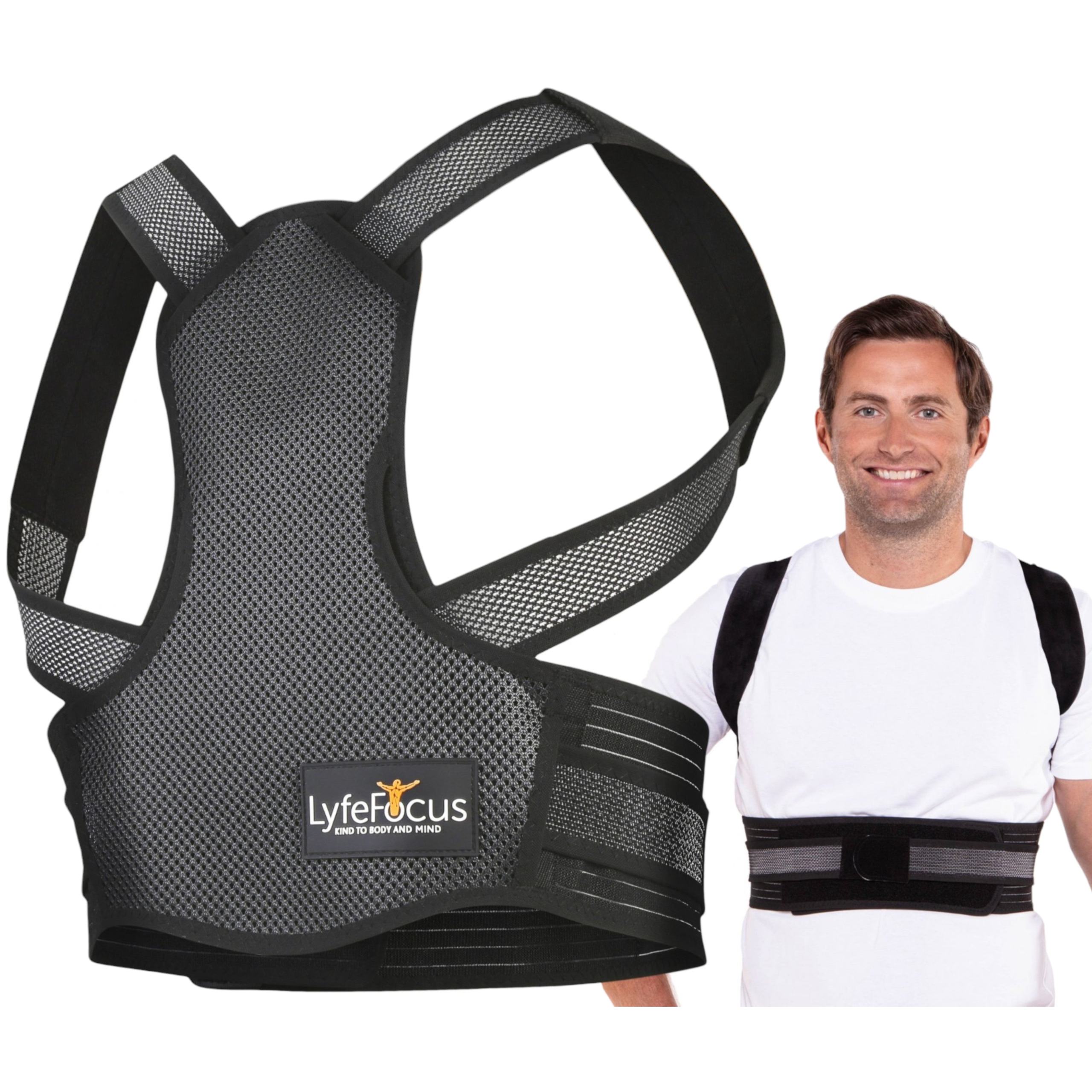
If you want the best posture corrector UK desk workers can wear under a shirt, the LyfeFocus Posture Corrector S1 is built for that job. It supports the upper back, and it comes in black and white, so you can match it to what you wear. There is a measurement guide to help you choose the right size before you order.
Here is a practical tip for any new corrector. Try it first on a quiet day at home. Wear it for 20 to 30 minutes while you work, then add a little time each day. This shows you whether the fit works before you wear it through a long day in the office.
How to Wear It and Build Better Habits
A corrector works best alongside small daily habits. Cambridge University Hospitals NHS Foundation Trust advises that you should not sit for more than an hour at a time, and that your screen should sit at eye level and arm’s length. You can read their full seating and ergonomics advice for a desk setup checklist.
Try these simple habits alongside the best posture corrector UK desk workers can buy:
- Stand up and walk at least once an hour.
- Raise your screen so the top sits at eye level.
- Keep your feet flat on the floor and your hips level with your knees.
- Wear your corrector for short sessions and take it off when your muscles feel tired.
- Add gentle shoulder rolls and stretches between tasks.
These habits matter as much as the product itself. The best posture corrector UK shoppers can buy still works better when you move often and set up your desk well.
Your Next Move
Choosing the best posture corrector UK buyers can rely on comes down to six checks: comfort, fit, upper back support, a discreet design, easy use and honest claims. Start with short sessions, add regular movement and keep your desk setup in check.
Not sure where to start? Reach out and our team will point you in the right direction.

Posture Corrector S1 (Black)
Take the first step toward better posture and lasting comfort.
Shop Now →