Buying Foam Rollers: 6 Things You Must Know Before You Choose
Buying foam rollers should be straightforward. In practice, the sheer number of options available — different densities, lengths, surface textures, and price points — makes the decision genuinely confusing, especially if you are new to foam rolling and not yet sure what you actually need. Buy the wrong one and you either end up with something so soft it barely does anything, or so aggressive that you use it twice and leave it in a corner. This guide cuts through the noise and gives you six essential things to understand before buying foam rollers, so you get a product that delivers real results from day one.
Why Buying Foam Rollers Is Worth Your Attention
Before getting into the specifics of what to look for, it is worth understanding what foam rollers actually do. Foam rolling is a form of self-myofascial release, a technique that applies sustained pressure to soft tissue to release trigger points, reduce muscle tightness, and improve blood flow to the area. Nuffield Health’s National Physiotherapy Lead explains that foam rolling improves recovery after exercise by reducing the onset of muscle soreness, increasing mobility, and supporting vascular and parasympathetic nervous system function. These are meaningful, evidence-supported benefits that go well beyond what a casual stretch can achieve. Buying foam rollers is an investment in a recovery tool that physiotherapists regularly recommend and that you can use at home, at the gym, or wherever your routine takes you.
1. Density Is the Most Important Variable When Buying Foam Rollers
When buying foam rollers, density is the single factor that will most determine whether your experience is effective and sustainable. Density refers to how firm the roller is and how much pressure it exerts on the muscle when you apply your body weight to it. Too soft, and the roller compresses under your weight without creating enough pressure to reach the deeper muscle tissue where knots and trigger points live. Too firm, and the pressure becomes painful rather than therapeutic, particularly for beginners whose tissue is not yet conditioned to deep myofascial work.
For most people buying foam rollers for the first time, a medium-density roller is the correct starting point. It delivers enough pressure to be genuinely effective on common problem areas like the thoracic spine, glutes, hamstrings, and calves, without being so aggressive that it discourages consistent use. As your tolerance builds over several weeks, you may find you want a firmer surface. But buying foam rollers at an aggressive density from the outset is one of the most common mistakes new users make.
2. Surface Texture Changes What the Roller Can Do
When buying foam rollers, the surface texture is the second key specification to consider. Smooth rollers provide even, consistent pressure across the full contact area. They are gentler and well suited to large muscle groups where broad coverage is the goal, such as the IT band, the upper back, and the quadriceps. Textured rollers, which feature raised ridges, knobs, or varied surface zones, target tissue at different depths simultaneously. The raised areas concentrate pressure into smaller contact points, mimicking the effect of a physiotherapist using thumbs or fingers to work into a specific muscle zone.
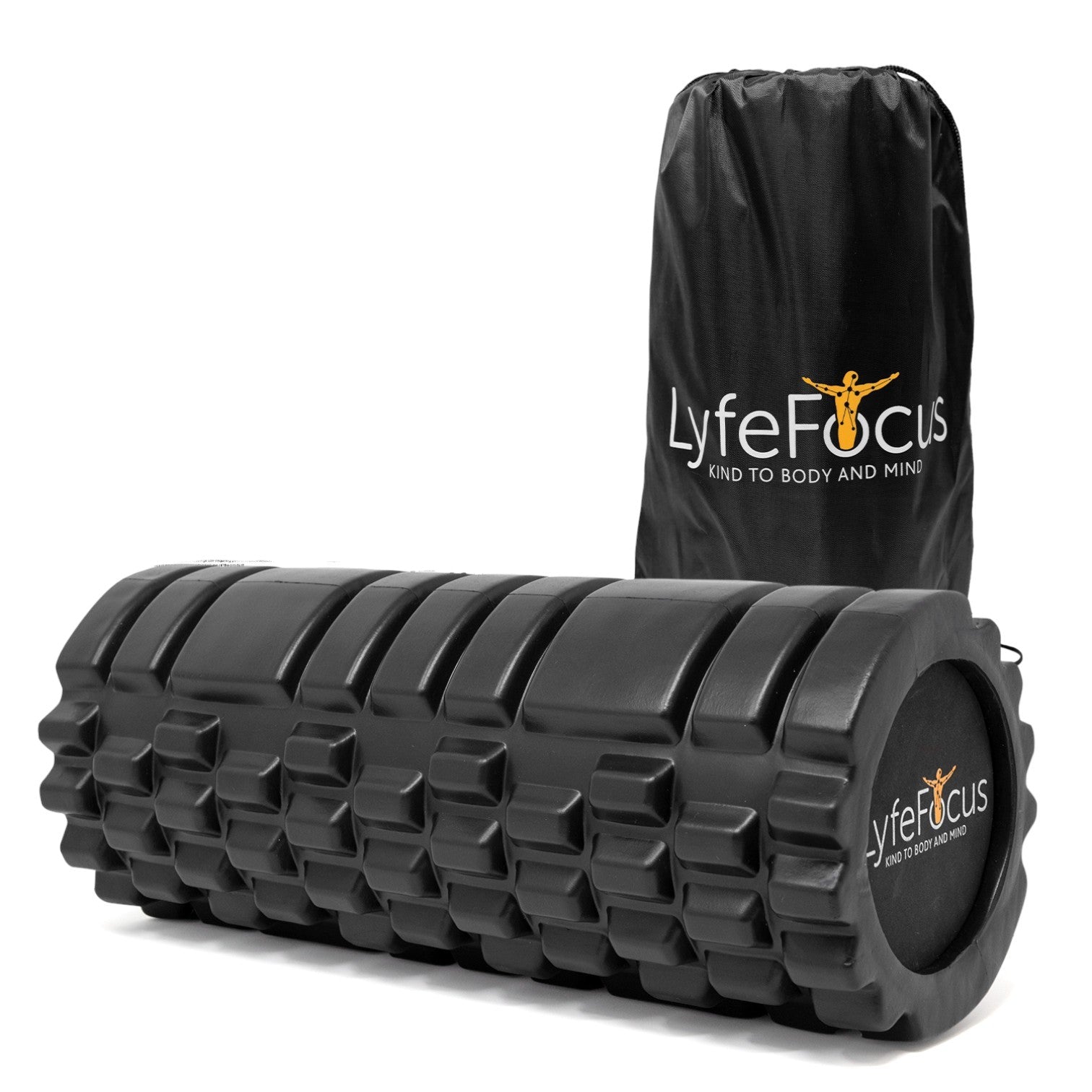
The LyfeFocus Foam Roller uses three distinct surface moulds designed to replicate the contact points of a professional massage: a wider zone for palm-like broad pressure, a tubular zone that replicates finger pressure for medium intensity, and smaller firmer elevations that deliver thumb-like deep pressure for releasing stubborn knots. This multi-zone approach makes buying foam rollers with textured surfaces a better all-round investment than a smooth roller for anyone dealing with muscle tightness in multiple areas of the body.
3. Size Determines Where and How You Can Use It
Standard foam rollers are typically 90cm in length, which makes them ideal for full-body use including the back, where you need the roller to span the full width of the torso. Shorter half-rollers at around 45cm are more portable and work well for isolated areas like the calves, shins, and forearms. When buying foam rollers for general home use and full-body recovery, the full-length option is almost always the better choice. It gives you the range to work from the upper back down to the glutes in a single rolling session without repositioning, and the wider surface means it is more stable under your body weight in the positions required to target larger muscle groups.
If portability matters, such as for use at the gym or when travelling, a compact roller that comes with a carry bag is worth considering. When buying foam rollers for this purpose, look for a design that is dense enough to maintain its shape and effectiveness after repeated compression and transport, rather than a cheap option that loses its structure quickly under daily use.
4. Durability Separates Good Foam Rollers from Cheap Ones
This is the buying foam rollers consideration that is hardest to assess from a product listing alone. Low-density foam rollers made from cheaper EVA foam compounds flatten and deform within weeks of regular use. When the foam compresses permanently, the roller stops being able to deliver effective pressure on the tissue, and you are essentially rolling on a cylinder that has lost its structural integrity. Buying foam rollers made from high-density, closed-cell foam or using a dual-layer construction means the roller maintains its shape and pressure characteristics over months and years of daily use.
This is particularly relevant when buying foam rollers for everyday recovery routines rather than occasional use. A roller that is used five to six times per week needs to be built to sustain that frequency without degrading. A simple test when buying foam rollers in person is to press your thumb firmly into the surface. If it compresses easily under thumb pressure, it will compress under your full body weight and lose its effectiveness quickly. Good foam rollers resist thumb pressure and spring back immediately when released.
5. Trigger Point Design Adds Targeted Depth
When buying foam rollers for muscle knots and chronic tightness rather than general recovery, a roller with a deliberate trigger point design delivers better results than a plain cylindrical roller. Trigger point rollers feature raised nodules or structured surface zones that focus pressure into specific areas of the muscle, activating the Golgi tendon organ response that causes the muscle to release. This is the same mechanism used in manual trigger point therapy by physiotherapists and sports massage therapists, but applied through your own body weight rather than a practitioner’s hands.
Buying foam rollers with trigger point capability is particularly relevant for desk workers and people with repetitive strain patterns, where tightness concentrates in predictable locations like the upper trapezius, thoracic paraspinals, glutes, and proximal hamstrings. A standard smooth roller will provide surface-level relief in these areas, but a trigger point design reaches the adhesions within the muscle belly that are driving the tightness.
6. Consider What Else You Need When Buying Foam Rollers
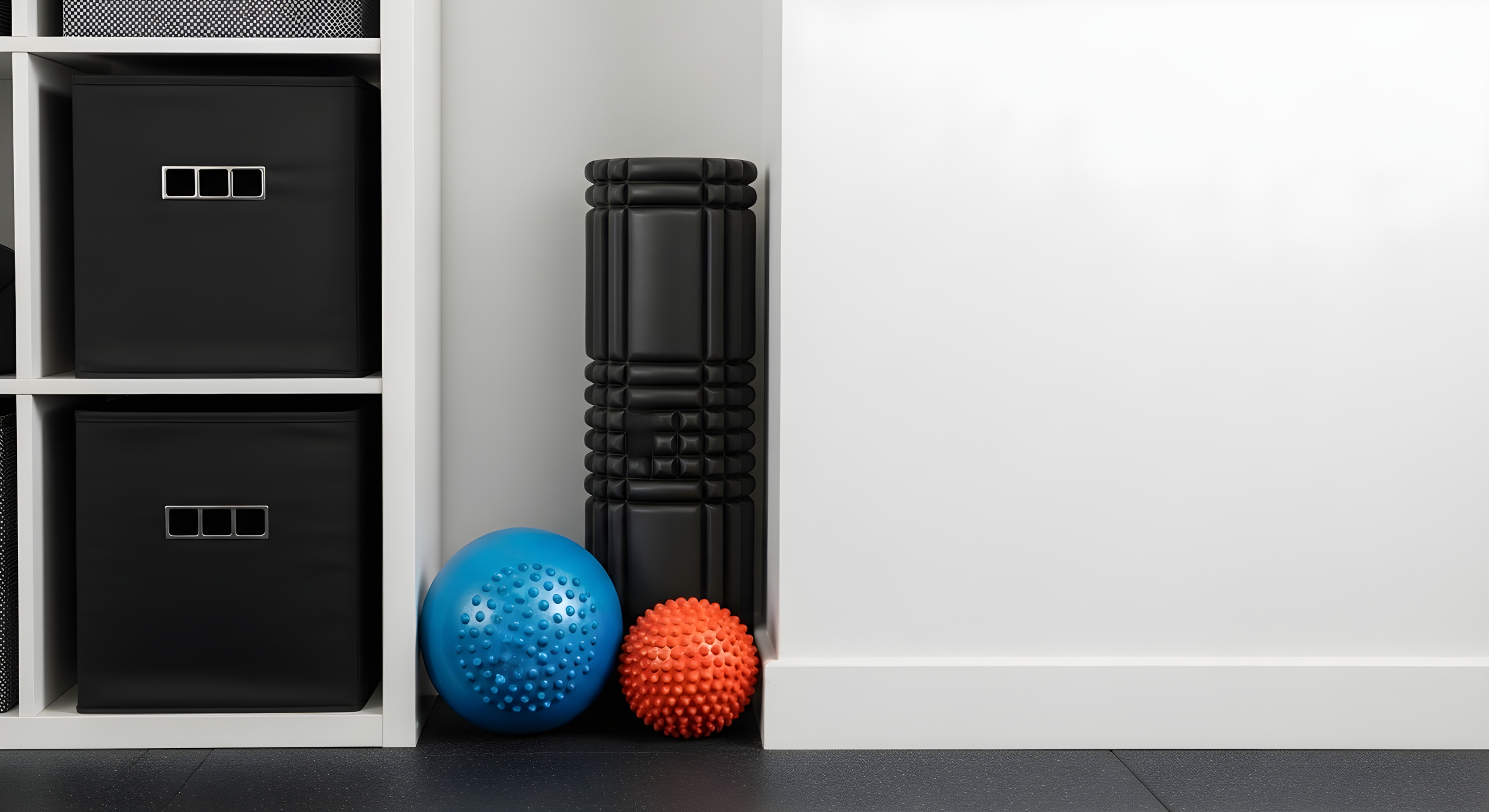
Foam rollers work best as part of a broader recovery toolkit. When buying foam rollers, it is worth thinking about whether a massage ball would complement your routine. Foam rollers cover large muscle groups effectively, but there are areas of the body, particularly the glutes, the plantar fascia, the pecs, and the area between the shoulder blades, where the curvature of a massage ball allows you to apply concentrated, targeted pressure that a foam roller cannot deliver as precisely. Buying foam rollers alongside a massage ball gives you a complete self-myofascial release system that covers both broad and precision recovery needs without requiring professional treatment for routine muscle tightness.
Browse the full range of foam rollers and massage balls to find the combination that suits your body, your routine, and your recovery goals.
Ready to Get Rolling
Buying foam rollers does not need to be complicated once you know what to look for. Prioritise density and surface texture first, choose a full-length option unless portability is a specific requirement, and look for a build quality that will hold up to daily use over the long term. A trigger point surface design adds meaningful depth for anyone dealing with chronic muscle tightness or knots, and pairing your roller with a massage ball rounds out your recovery capability. If you have questions about which product is right for you, our team is happy to help via our support page.

Foam Roller (Black)
Target deep muscle tissue and release built-up tension with a premium trigger point foam roller.
Shop Now →